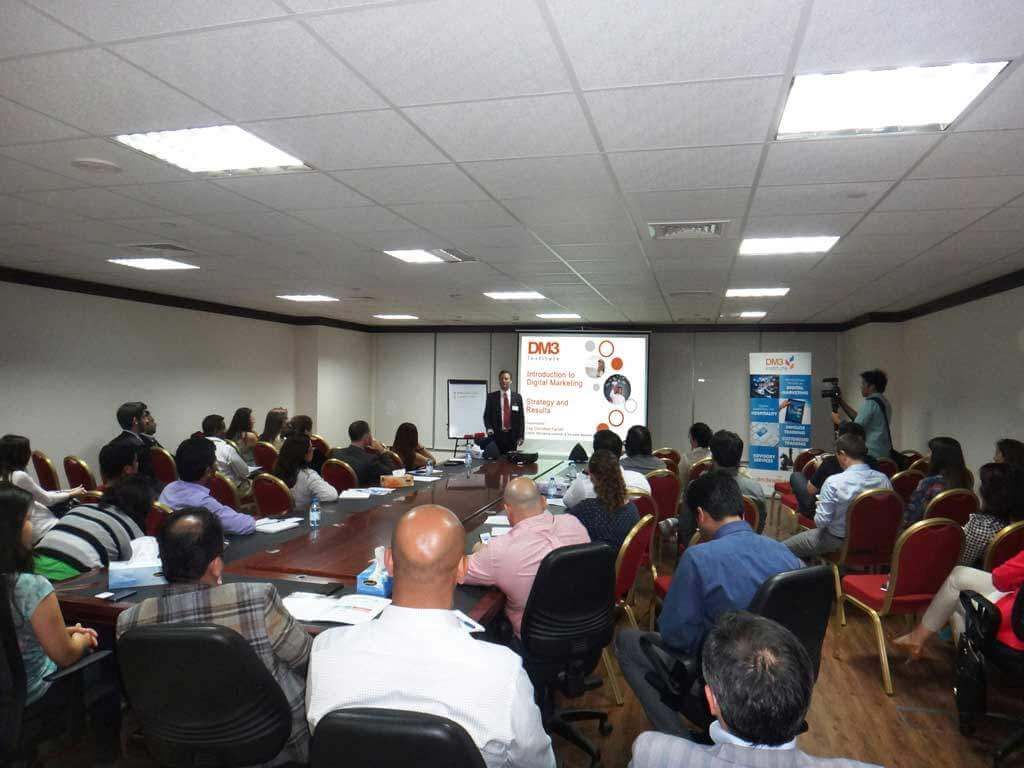
AI training for marketing teams should teach people to complete and check recognisable marketing work: research an audience, develop a campaign brief, produce content, review its claims and explain performance. It should use tools the organisation permits, with clear boundaries around data and publication.
For a Marketing Director or CMO in Dubai, the purchasing decision is therefore about the work participants will practise. A compelling demonstration does not tell you whether your team can repeat the process with its own material, recognise an error or decide when to stop.
I would choose a programme by asking what evidence of competence people will produce during the session. The syllabus should make that answer visible before you book.
Define the marketing problem before choosing the course
Start with a recurring task that is causing difficulty. Perhaps campaign briefs reach the agency without a clear audience. Perhaps content requires repeated corrections, or reports describe changes without explaining which decision needs attention.
Translate that problem into an observable learning outcome. Instead of “understand AI for content”, specify: “Given an approved product sheet and audience brief, prepare a draft email, trace each commercial claim to its evidence and explain what needs approval.”
That outcome gives the trainer something concrete to design around. It also gives the manager a basis for deciding whether the learning is useful.
Ask participants where they get stuck before the programme is finalised. Separate gaps in marketing knowledge from gaps in using AI. If the team cannot define a useful conversion or describe its customer, instruction in prompting will not resolve the underlying problem.
Decide how much foundation the team needs
A general introduction can establish shared vocabulary, basic limitations and appropriate use. It may suit a team whose experience varies considerably. It should leave enough time for participants to apply those ideas to their roles.
Applied marketing training needs more specific inputs and decisions. A copywriter must preserve product meaning while adapting a message. An analyst must identify whether a suggested explanation is supported by the data. A brand manager must judge whether acceptable words add up to an appropriate promise.
I would ask for differentiated exercises within a shared campaign scenario. Everyone can discuss the same business objective while producing work relevant to their responsibility. Avoid assuming that every participant needs the same depth of analytics, creative production or campaign operations.
Cover the whole task, including verification
Research and briefing
An exercise should require participants to distinguish evidence from an attractive hypothesis. Give them an approved source pack and a question about an audience or market. Ask them to produce a short research summary that shows which conclusions have support, which remain uncertain and what should be checked next.
The need for verification is well established. NIST’s Generative AI Profile identifies confidently presented false content and fabricated citations among generative AI risks. A source-looking link is therefore something to inspect, not proof that the accompanying claim is true.
My recommended exercise is to open the original sources and check dates, context and wording before turning the research into a brief. The brief should state the audience, objective, proposition, evidence, channel and constraints. Participants should practise identifying missing information before requesting more polished output.
Production and editorial review
Use a realistic production task, such as adapting one approved proposition into an email and a landing-page introduction. Keep the source material constant so participants can see whether a variation changes the offer or invents a benefit.
Then exchange drafts. Ask the reviewer to examine factual accuracy, tone of voice, commercial claims and the intended action. A phrase such as “guaranteed results” should trigger a request for substantiation and approval, even if it sounds persuasive.
If the team produces English and Arabic material, agree who can review each language in context. A translated draft still needs a competent reviewer. Brand voice guidance should include examples and prohibited claims, rather than relying on a request to “sound premium”.
The exercise should finish with an approval decision and recorded corrections. That makes review part of producing the work, rather than an optional discussion after generation.
Analysis and reporting
Give participants a small approved or synthetic dataset, a definition of each metric and a decision the report should support. Ask for an explanation that separates what changed from possible reasons for the change.
Metric definitions matter. Google Analytics documents active users and sessions as separate measures. A fluent narrative that treats them interchangeably is not an acceptable report.
Participants should reconcile the summary with the source numbers, check the reporting period and identify missing context. For example, an apparent improvement could coincide with a change in campaign mix; the table alone may not establish why it happened. The useful outcome is a defensible recommendation or a well-framed question, not simply a shorter slide deck.
Use approved tools and prepared material
Confirm accounts, access and permitted functions before the session. If a demonstration uses features unavailable in the team’s approved environment, ask how the exercise will translate into everyday work.
I would use sanitised examples or clearly labelled synthetic data unless the organisation has approved the specific material and environment. Customer lists, unpublished plans and confidential research should not become improvised classroom inputs.
Agree who answers questions about permitted data and publication rights. Training can practise the organisation’s rules; it cannot substitute for decisions that its accountable owners have not made. The broader responsibilities are covered in The CEO’s Guide to AI Governance.
An example one-day programme
The following is an illustrative agenda, not a compulsory format or a standard service offer. It assumes participants have working accounts and basic familiarity with the approved tools. Adapt the balance to their roles and starting point.
The day runs from 09:00 to 17:00, with six and a half hours of learning activities, one hour for lunch and two fifteen-minute breaks.
| Time and module | Exercise | Observable learning outcome |
|---|---|---|
| 09:00-09:30: objectives and boundaries | Review the campaign scenario and classify proposed inputs. | Explain the task, permitted data and approval boundary. |
| 09:30-10:45: research and briefing | Check a source pack and prepare a campaign brief. | Separate supported claims, assumptions and unanswered questions. |
| 10:45-11:00: break | Pause. | No assessed activity. |
| 11:00-12:30: content production | Adapt approved product material for two channels. | Produce relevant drafts without changing the offer or inventing benefits. |
| 12:30-13:30: lunch | Pause. | No assessed activity. |
| 13:30-14:30: editorial review | Exchange drafts and document required corrections. | Identify unsupported claims and explain an approval decision. |
| 14:30-14:45: break | Pause. | No assessed activity. |
| 14:45-15:45: analysis and reporting | Prepare a decision note from a small campaign dataset. | Reconcile the figures and distinguish findings from possible explanations. |
| 15:45-17:00: independent task and feedback | Complete a fresh brief and explain the checks performed. | Demonstrate repeatable work, identify limitations and agree further practice. |
Assess what people can do without the demonstration
Give each participant a fresh task with different source material. Allow the approved tool and normal reference material, but require them to make and explain their own decisions.
I would assess four things: whether the output answers the brief, whether claims and figures are supported, whether the process respects data boundaries, and whether the participant knows when to request help. Agree what constitutes an acceptable result before the exercise begins. A critical unsupported claim should require correction regardless of how polished the writing is.
Keep the finished work and feedback as evidence of learning. A satisfaction survey can inform course improvements, but it does not demonstrate independent performance. Ask the manager to review a subsequent workplace task after participants have had an opportunity to practise.
Recognise the limits and prepare the next step
One day can provide focused practice; it cannot establish competence across every marketing activity. Teams with very different starting levels may need preparation or separate sessions. Advanced analysis, production integrations and unresolved data permissions require additional work beyond this agenda.
For the manager’s responsibilities around the course, use the 30-day plan for preparing marketing teams for AI to organise ownership, practice time and workplace review.
Once the learning requirement is clear, use the corporate AI training cost guide to consider the budget and proposal scope.
Before commissioning a programme, write a short brief naming the participant roles, one priority workflow, approved tools, permitted training material and the output you want people to produce. Bring one example of acceptable work and one example that currently needs too much rework. Those two examples will make a discussion with a trainer more useful than a long list of AI features.

Planning AI training for your marketing team?
Let’s discuss your team’s roles, learning priorities and the practical work a tailored programme should help them improve.
Book a Call with Christian