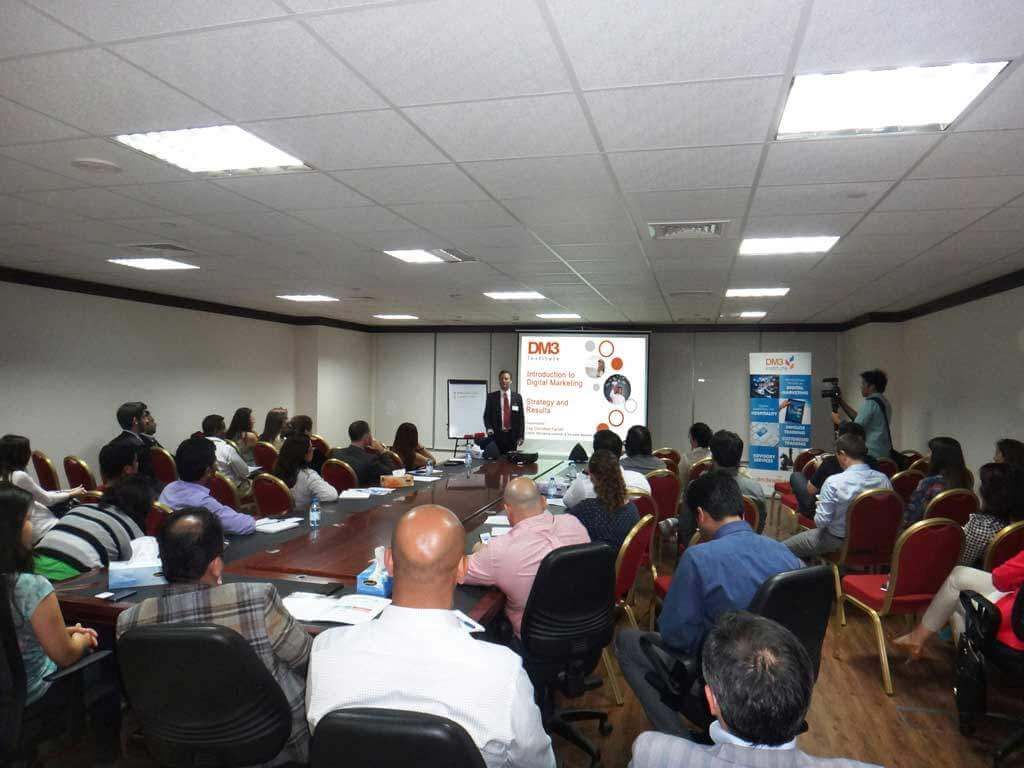
Corporate AI training cost in Dubai depends first on what you are buying: a place on a public course, a private workshop for your team, or a programme designed around your organisation.
For an initial budget, separate the training fee from preparation, tool licences, venue costs and your team’s time. My programmes are quoted around your organisation’s brief; the worked example below is hypothetical, not a published tariff or an offer.
For HR and Learning & Development leaders, the first useful question is therefore not simply “How much is a training day?”
It is: “What does this price cover, who is it for, and what should our people be able to do afterwards?”
Here is how I would approach the budget.
How corporate AI training is priced
When requesting a proposal, start by confirming the pricing unit. Use this comparison to structure your brief.
| Format | Pricing basis | What to confirm |
|---|---|---|
| Public course | Per participant | Contact hours, delivery format, VAT and what each place includes. |
| Private team workshop | Per team or session | Participant limit, exercises, materials and any additional facilitators. |
| Bespoke programme | Quoted per engagement | Design and preparation, delivery, tools, follow-up and the total scope. |
A standard workshop and a bespoke programme are different briefs. A customised engagement may involve additional preparation, exercise development and follow-up. Ask for those elements to be scoped explicitly rather than estimating the total by multiplying a workshop day rate.
For a programme with me, the appropriate next step is a scoped proposal based on your audience, objectives, delivery format and preparation requirements.
What changes the cost of corporate AI training?
I would compare proposals across six areas rather than comparing the headline day rate alone.
1. The outcome you are buying
An introductory session, a practical departmental workshop and an executive decision-making programme are different briefs.
For an introductory session, the objective might be to help employees recognise useful applications and understand the limits of AI.
For a departmental workshop, I would expect practice on defined tasks, such as drafting a marketing brief, preparing a management summary or improving an internal knowledge workflow.
For executives, I would focus the brief on priorities, investment decisions, accountability and the conditions under which AI should be used.
Define the intended outcome before deciding how many training days to buy. For the strategic context, see Why AI Strategy Beats AI Tools.
2. The amount of customisation
Ask whether “customised” means changing the examples on a few slides or designing exercises around your organisation.
A useful proposal should explain whether the preparation includes stakeholder discussions, a skills assessment, adaptation to approved tools, exercise development and agreed learning outcomes.
It should also separate existing course material from new content development. Those are different pieces of work, even when they lead to the same number of classroom hours.
3. The group size and composition
I would not design the same session for ten experienced managers and a mixed group of sixty employees.
For hands-on learning, ask how the trainer will provide feedback, handle different starting levels and support participants who get stuck.
Confirm the agreed participant limit, whether additional facilitators are included and what happens to the fee if the group grows.
A lower cost per head is not automatically better value if each person receives less useful practice.
4. The delivery format
For a Dubai-based team, on-site training may be the most practical way to work together. For employees across several locations, live online sessions may be a better fit.
Ask for a breakdown of delivery, venue, travel and any support required for remote participants.
Do not assume that changing the format leaves the rest of the programme unchanged. Discuss the session length, breaks, exercises and feedback process as part of the design.
5. The trainer and preparation involved
Ask who will actually deliver the programme, not only whose name appears on the proposal.
I would request a relevant session outline, an example exercise and evidence that the trainer can explain the subject to the audience you are bringing.
A senior leadership workshop needs a different teaching approach from technical implementation training. Choose the expertise that fits the assignment rather than paying for a title alone.
6. What happens after the session
Clarify what participants and managers keep: learning materials, exercise templates, a practical assessment or an agreed action plan.
Then distinguish those deliverables from optional follow-up coaching, implementation work and ongoing advisory support.
The proposal should make the boundary clear. “Support included” is not specific enough without a duration, format and scope.
Public course or in-house AI training: which should you budget for?
For one or two employees who need a general foundation, I would consider a public course. The important checks are whether the curriculum matches their roles and whether they will have a way to apply the learning.
For a team working on shared processes, I would also request an in-house proposal. That creates an opportunity to agree common working practices and use relevant examples.
Compare the total cost for your actual headcount, not the individual ticket price against the entire workshop fee.
My decision rule would be:
Choose around the learning requirement first. Then compare the full cost of the formats that can meet it.
Avoid packing unrelated departments into one session purely to reduce the cost per participant. A shared introduction can be useful, but the practical work may need to be separated by role.
Budget example: the training invoice is not the whole investment
Consider this hypothetical example. It is a budgeting illustration, not an advertised rate or a quote from me.
Suppose a private programme is quoted at AED 18,000 for twenty participants. The training fee works out at AED 900 per person.
Now suppose those employees each spend six hours in the session, and your organisation values their time at an assumed fully loaded cost of AED 150 per hour.
Their attendance represents another AED 18,000 in staff time:
20 participants × 6 hours × AED 150 = AED 18,000.
The combined economic cost would therefore be AED 36,000 before any additional licences, venue costs or follow-up work.
Staff time is not an extra payment to the trainer. It is an internal resource commitment.
This is why I would protect relevance and participation before trying to remove the last few dirhams from the delivery fee. You are committing your team’s attention as well as your training budget.
What should an AI training quote include?
Ask for a written proposal that makes these points explicit:
- Audience and outcomes: roles, starting level, participant limit and what people should be able to do afterwards.
- Preparation and delivery: customisation, contact hours, trainer, location, format and any additional facilitators.
- Tools and data: required accounts, licence costs, approved environments and the material participants may use.
- Deliverables and follow-up: materials, assessments, action plans, access periods and any separate support.
- Commercial terms: total fee, VAT treatment, expenses, payment schedule, cancellation terms and recording rights.
On certificates, ask exactly what is being issued and by whom. A statement of attendance should not be presented as proof that someone can perform a task independently.
For me, responsible use should also be part of the learning brief, not an optional slide at the end. I would include output checking, uncertainty, appropriate data handling and clear human accountability. The CEO’s Guide to AI Governance explores those responsibilities in more detail.
The NIST AI Risk Management Framework offers a voluntary reference for considering trustworthiness across the design, use and evaluation of AI systems. It is a useful discussion resource, not a certificate that a training provider can claim simply by mentioning it.
How to assess whether the programme was worth the investment
I would agree a small number of observable outcomes before training begins.
For a marketing team, that might mean producing and reviewing a campaign brief against a defined quality standard. For managers, it might mean evaluating an AI-generated recommendation and explaining what still needs verification.
Record a baseline, repeat a comparable task afterwards and review whether the new practice is still being used after an agreed period, such as thirty days.
Look at the quality of the output, the time required, the amount of rework and the level of human checking still needed.
Do not count every minute saved as a cash saving. Recovered time becomes a financial benefit only when it is used productively or changes an actual cost.
Attendance and satisfaction are useful signals. I would not accept them as the entire business case.
How to request a useful corporate AI training proposal
You do not need to write the syllabus before contacting a trainer. A short brief can be enough to begin.
For example:
We are planning AI training for approximately twenty marketing and commercial managers in Dubai. Participants have mixed experience. We want them to improve research, drafting and review using tools approved by our IT team. We would like to discuss a one-day workshop and whether follow-up practice is necessary. Our preferred delivery window is [month].
That tells the trainer who the programme is for, what work matters and what needs to be discussed.
Include your preferred delivery format, approximate dates and budget range when available. Avoid sending confidential documents at the enquiry stage; describe the tasks first.
The aim is a proposal built around your requirements, not a generic brochure with your company name added.
Frequently asked questions
Is corporate AI training charged per person or per team?
Both models exist. A public course may be priced per participant, a private workshop per team or session, and a bespoke programme as a complete engagement. Always confirm the pricing unit, participant limit and what the fee covers.
Is online AI training cheaper than in-person training?
Do not assume that online delivery will automatically reduce the total fee. Compare the actual proposals, including preparation, contact hours, interaction, support and any venue or travel costs.
Can one day be enough?
For a tightly defined objective, one day may be an appropriate starting point. I would not promise organisation-wide adoption or deep competence from a single session. Match the duration to the tasks, starting level and practice required.
Are AI tool subscriptions included?
Check the proposal rather than assuming they are. Ask which accounts are required, who supplies them and whether participants can continue using the tools afterwards. The exercises should fit your organisation’s approved environment.
How much does a programme with Prof. Christian Farioli cost?
My programmes are quoted around the agreed brief. Share your team size, roles, objectives and preferred format so we can discuss the scope and prepare a tailored proposal.
Choose the programme before comparing the day rate
A useful AI training budget starts with a clear answer to one question: what should your people be able to do differently?
Define that, agree how it will be practised and assessed, and then compare the complete proposals.
You are not simply buying hours in a room. You are deciding which capabilities deserve your team’s time and your organisation’s investment.

Planning AI training for your team in Dubai?
Share your team size, roles, learning priorities and preferred dates. Let’s discuss the right programme for your organisation and a tailored training proposal.
Book a Call with Prof.Christian